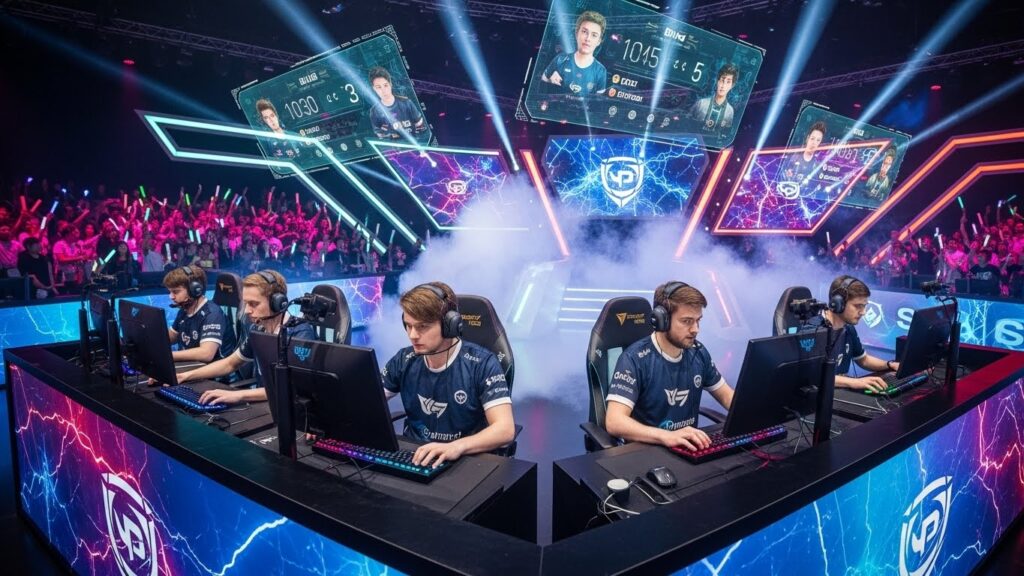
Competitive gaming has produced no title whose combination of strategic depth, mechanical skill ceiling, and professional ecosystem matches what League of Legends has built across its competitive lifespan. A game that began as a Warcraft III mod modification has become the defining title of competitive esports — generating the largest tournament viewership in gaming history, sustaining professional leagues across three global regions, and continuously evolving through patch updates that prevent the strategic stagnation that competitive games without active development typically experience. Understanding league of legends at a level that improves competitive play and enriches professional viewing requires engaging with roles, strategy, and the esports ecosystem simultaneously. Fans following competitive League of Legends with dedicated markets can find coverage at dbbet tz.
What League of Legends Is: The Foundation
League of legends is a multiplayer online battle arena game — a genre whose foundational competitive structure places two teams of five players on a symmetrical map, each attempting to destroy the opposing team’s base structure known as the Nexus. The path to the Nexus runs through three lanes defended by towers that must be progressively destroyed, through a jungle area whose monster camps provide resources and objectives, and ultimately through the base defenses that protect each team’s core structure.
This fundamental structure has remained consistent across the game’s competitive history while the specific champions, items, and strategic approaches that teams employ have evolved continuously through Riot Games’ active development. The combination of strategic consistency and tactical evolution — the same map and objectives providing the competitive framework while what happens within that framework changes with each significant patch — creates a competitive environment that rewards deep game knowledge while continuously requiring adaptation that prevents established approaches from becoming unassailably dominant.
League of Legends Champions: Roles and Functions
League of legends champions currently number over 160 distinct playable characters whose individual kits — the specific abilities that define each champion’s contribution to a team composition — create the enormous strategic variety that the game’s competitive depth depends upon. Every champion fits within role categories that define their primary competitive function, though many champions can fill multiple roles depending on their specific kit characteristics and the strategic context of a given team composition.
The top lane — isolated from the rest of the map during most of the early game — rewards champions whose self-sufficiency, durability, and split-push threat create strategic pressure that forces opponents to respond rather than freely pursuing objectives elsewhere. The jungle role’s champion must clear monster camps efficiently, track opponent movements across the entire map simultaneously, and identify the specific moments where their champion’s arrival in a lane creates the numerical advantage that kills and objectives follow from.
Mid lane champions occupy the map’s central position whose access to both side lanes and jungle areas creates the roaming threat that influences the entire early game’s competitive dynamics. Bot lane — the traditional home of attack damage carry champions paired with support characters — provides the late-game scaling damage source that most team compositions are constructed around protecting and enabling. Support champions whose utility, protection, and vision control enable teammates rather than generating independent threat complete the role structure that every competitive team composition requires across all five positions.
Strategic Principles: How Games Are Won
League of Legends matches are won through resource accumulation and objective control rather than simply through killing opponents — a strategic framework that fundamentally shapes how competitive play should be approached at every skill level. Gold — earned through minion kills, champion kills, and objective control — funds the item purchases that translate theoretical champion strength into practical performance advantages. Teams that accumulate gold more efficiently than their opponents across early and mid game phases build the item advantages that make late-game teamfights more favorable.
Objectives — the Dragon, Baron Nashor, and Rift Herald that the jungle area contains — provide the team-wide benefits that accelerate gold accumulation, strengthen champion statistics, and in the Dragon’s case provide stacking permanent buffs whose accumulation decisively tips late-game competitive balance. Professional teams approach objective control with the game-clock awareness and cross-map positioning that makes securing these resources reliable rather than contested — understanding that the teamfight before the objective matters as much as the objective control itself.
Vision control — the placement and destruction of ward items that reveal enemy positions across the map — provides the information foundation that every other strategic decision depends upon. Teams operating with comprehensive vision of opponent positions make objective decisions with the confidence that unexpected ambushes cannot disrupt, while teams that neglect vision play reactively rather than proactively — responding to opponent aggression rather than dictating competitive tempo through information advantage.
The Meta: Understanding Patch-Driven Strategy
League of Legends’ competitive meta — the specific champion selections, strategic approaches, and team compositions that are most effective in any given patch state — evolves with each significant balance update that Riot Games deploys. Understanding meta dynamics is essential for competitive improvement because playing champions or following strategies that the current patch has rendered suboptimal creates consistent disadvantages that individual mechanical excellence cannot overcome when the competitive framework fundamentally disfavors a chosen approach.
Strong meta understanding at the champion selection phase — the pre-game draft where teams select their five champions and ban opponents’ strongest options — provides competitive advantages before a game begins. Teams that consistently select compositions whose champions’ strengths complement each other while exploiting specific weaknesses in opponents’ selected compositions win games that mechanical skill parity would otherwise make genuinely uncertain in outcome.
The meta’s continuous evolution — patches arriving every two weeks that adjust champion statistics, item costs, and occasionally fundamental game mechanics — creates the ongoing learning requirement that competitive League of Legends demands from serious players. Adapting to patch changes rather than remaining committed to approaches that strong performances in previous patches established as comfortable creates the competitive flexibility that sustained ranked improvement requires.
League of Legends Esport: The Professional Ecosystem
League of legends esport operates through Riot Games’ international league structure — the LCK in South Korea, LPL in China, LEC in Europe, and LCS in North America — whose regional competitions feed into the annual World Championship that determines global competitive supremacy. The World Championship’s viewership numbers — consistently exceeding tens of millions of concurrent viewers for finals matches — represent the largest esports broadcast audiences globally, with viewing patterns that reflect both League of Legends’ enormous player base and the specific competitive investment that years of following regional leagues creates in dedicated fans.
South Korean and Chinese teams have historically dominated World Championship competition — the LCK’s tactical precision and mechanical standard and the LPL’s aggressive style and individual talent depth collectively producing most World Championship winners across the tournament’s competitive history. European teams have mounted challenges that occasionally reached championship matches, while North American regional success has translated to international competition results less consistently than the region’s investment level would suggest.
The professional ecosystem’s depth — the development leagues that identify and prepare players for main roster competition, the coaching and analytical staff infrastructure that professional organizations have built, and the broadcast production quality that makes watching professional League of Legends genuinely entertaining — has matured into something that compares favorably to traditional sports professional league structures rather than the informal competitive scenes that esports resembled in their developmental phases.
Climbing Ranked: Practical Improvement Principles
Consistent ranked improvement in League of Legends requires the honest performance assessment that emotional responses to losses and variance frustration consistently interfere with. Identifying the specific decision patterns that create repeated negative outcomes — poor objective timing, inconsistent ward placement, champion pool choices that create systematic disadvantages — and targeting those specific areas for deliberate practice produces improvement that general play volume alone cannot generate at the same rate.
Champion pool discipline — developing genuine expertise across two or three champions rather than playing whatever the current tier list suggests is strongest — creates the mechanical foundation and game sense depth that consistent performance requires. The players who climb most reliably are those who understand their champions deeply enough that correct decisions in complex situations feel intuitive rather than calculated — the automation that deep champion knowledge creates freeing cognitive resources for the map awareness and decision-making that climbs at higher ranks most directly reward.