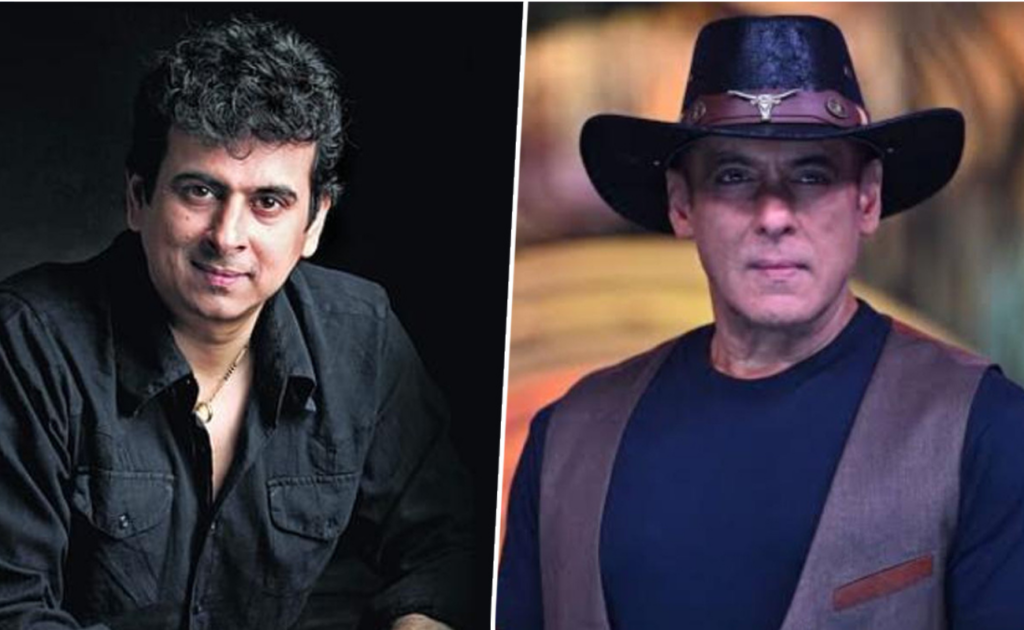
Paid negative public relations (PR) campaigns and online trolling is a new debate in Bollywood recently ignited by Palash Sen questioning Salman Khan’s statement. In a recent interview with SCREEN, the frontman of Euphoria stated that “Salman is part of the problem”, which was part of a lengthy discussion on what celebrities do to affect public opinion via publicity. His remarks follow Salman’s remarks on paid trolling of actors and movies in Bigg Boss 20 and his questioning of online ‘paid trolling’. The exchange has again raised the issue of celebrity publicity, online criticism/accountability in the Hindi movie industry.
In Bigg Boss 20, Salman Khan voiced his opposition to the trend of trolling celebrities’ movies that don’t perform well at the box-office. He also raised the concern of the use of paid negative publicity campaigns, stating that some actors or producers could be paying for negative publicity to hurt the name of their peers. Salman attacked individuals that earn money by derogatory comments towards others and questioned the morality of writing reviews and comments about films to gain remuneration. He also discussed body shaming and personal attacks on celebrities, such as online comments made about women after giving birth. He has stood up for actors who have been attacked for their looks, and has highlighted the negative effects of social media.
As a response to Salman’s comments, Palash Sen pointed out that the issue of negative PR could not be divorced from the influence of powerful personalities in the film industry. This kind of behavior is often seen at the top of the food chain, he said. Palash also said he was concerned about how difficult it was to separate out the genuine public response from a coordinated or sponsored online effort. Loving a film with more dislikes than likes, he said that people were not always able to tell if the reactions were genuine or for the money. Distributing this public opinion through positive and negative PR has become more difficult to believe that it’s true online, and Palash says that’s the case more often than not.
Palash talked about Salman’s stance, but admitted that it takes guts to talk about paid PR or trolling in public. He did however doubt whether Salman’s statements on Bigg Boss 20 were spontaneous or pre-recorded for TV viewing, as it was now difficult to tell which were authentic and which were scripted. Palash also spoke of his own journey in the entertainment industry, noting how the culture of networking with other professionals, attending celebrity camps and being constantly in the spotlight was challenging. The frontman of the band Euphoria (with songs like “Dhoom Pichuck Dhoom” and “Maaeri”), Palash has been active in both the fields of music and acting. His remarks come at a time when artists in an industry where promotion can have a significant impact on a celebrity’s image are under stress.
The falling out between Palash Sen and Salman Khan has come as a new twist in the controversy regarding the publicity culture and social media culture of Bollywood. Salman has spoken about trolling online and paid attacks against celebrities, whereas Palash has wondered who influential people in the industry could be responsible for developing or maintaining such practices. Yet, Palash’s comments are his own and the reports available do not make it apparent that Salman actually funded any specific negative PR campaign.
Questions regarding transparency, media ethics and accountability in the celebrity culture emerge as a result of the discussion. It is too early to tell if the industry will open up more about their publicity strategies, but the exchange has further emphasized the need to differentiate between verified information and paid promotion, online speculation and unsubstantiated allegations.